 EN
EN
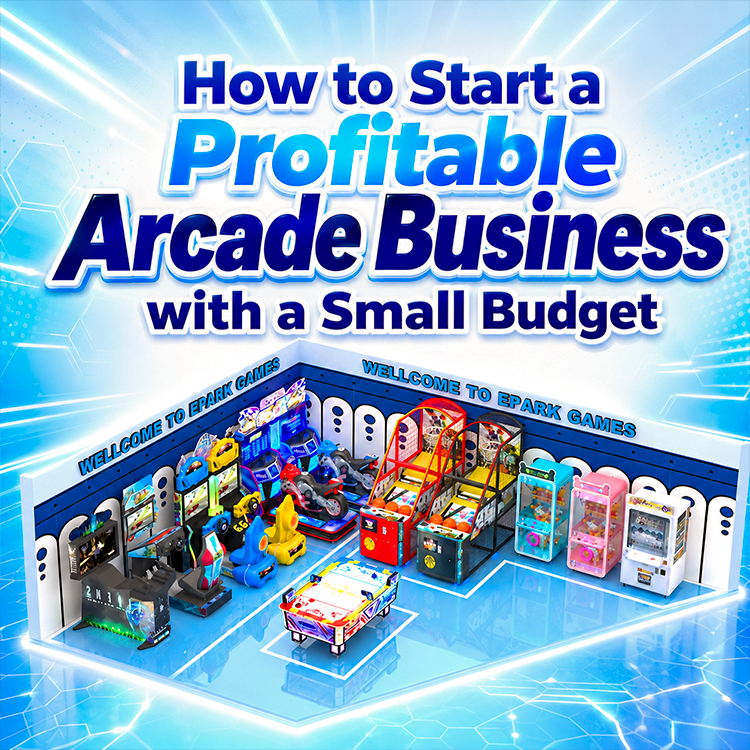
Starting an arcade business has become an increasingly attractive opportunity for entrepreneurs looking to enter the entertainment industry. The global demand for location-based entertainment continues to grow as families, teenagers, and young adults seek interactive experiences that cannot be replicated at home.
One of the biggest misconceptions about the arcade industry is that you need hundreds of thousands of dollars to get started. While large family entertainment centers (FECs) often require substantial investments, many successful operators begin with a much smaller budget and gradually scale their businesses over time.
The key to success is not how much money you invest—it is how wisely you invest it. Smart location selection, high-ROI arcade machines, controlled startup costs, and effective marketing strategies can help small-budget operators build profitable and sustainable businesses.
In this guide, we will show you how to start a profitable arcade business with a small budget while minimizing risk and maximizing return on investment (ROI).
Is It Possible to Start an Arcade Business with a Small Budget?
The short answer is yes.
Many successful arcade operators started with a limited number of machines and expanded as revenue increased. In fact, starting small often provides several advantages over launching a large entertainment center immediately.
Understanding Different Arcade Business Models
Not all arcade businesses require the same level of investment.
| Business Model | Description | Investment Level |
| Arcade Corner | Small setup inside an existing venue | Low |
| Mini Arcade | Independent venue with limited machines | Medium |
| Hybrid Arcade + Café | Entertainment plus food service | Medium |
| Family Entertainment Center (FEC) | Entertainment plus food service | High |
For first-time entrepreneurs, an arcade corner or mini arcade is often the most practical option.
Typical Startup Budget Ranges
| Business Type | Estimated Investment |
| Small Arcade Corner | $5,000–$20,000 |
| Mini Arcade | $20,000–$50,000 |
| Mid-Size Arcade Center | $50,000–$150,000 |
| Full FEC | $150,000+ |
These figures vary by country and business model, but they demonstrate that entering the arcade industry does not necessarily require a large investment.
Why Starting Small Can Be an Advantage
Small-budget operators often enjoy:
Lower financial risk
Faster decision-making
Easier management
Quicker ROI
Greater flexibility
Instead of committing to a large venue immediately, many successful operators validate their market first and expand later.
Step 1: Choose the Right Location
Location remains one of the most important factors influencing arcade profitability.
Even the best arcade machines cannot compensate for poor foot traffic.
High-Traffic Locations That Don't Require Premium Rent
Popular locations include:
Community centers
Cinema lobbies
Food courts
Indoor playgrounds
Retail complexes
Tourist attractions
University districts
The goal is to find locations with consistent customer traffic rather than simply the highest traffic volume.
Key Location Evaluation Factors
| Factor | Why It Matters |
| Foot Traffic | Determines customer volume |
| Target Demographics | Impacts machine selection |
| Competition | Influences market opportunity |
| Accessibility | Affects customer convenience |
| Rental Cost | Impacts profitability |
A lower-rent location with steady family traffic often outperforms expensive premium locations.
Step 2: Start with High-ROI Arcade Machines
Machine selection has a direct impact on profitability.
Small-budget operators should prioritize machines with:
High replay value
Low maintenance requirements
Broad customer appeal
Proven revenue performance
Best Arcade Machines for Small-Budget Operators
| Machine Type | Investment Level | Revenue Potential |
| Claw Machines | Low | High |
| Redemption Games | Medium | High |
| Basketball Arcade Games | Medium | High |
| Kiddie Rides | Low | Stable |
| Air Hockey Tables | Medium | Stable |
These machines are popular because they attract a wide audience and encourage repeat play.
Why Redemption Games Remain Highly Profitable
Redemption machines continue to be among the highest-earning attractions in many arcades.
Their success comes from:
Prize motivation
Repeat-play psychology
Family appeal
Competitive gameplay
Customers often continue playing until they earn enough tickets for prizes, increasing average spending per visit.
Step 3: Calculate ROI Before Buying
One of the most common mistakes new operators make is purchasing machines based solely on price.
A cheaper machine does not necessarily produce higher profits.
Simple Arcade ROI Formula
Before purchasing equipment, estimate earning potential.
Monthly Revenue Formula
Monthly Revenue = Daily Plays × Price Per Play × Operating Days
Example
100 Plays Per Day
× $1 Per Play
× 30 Days
= $3,000 Monthly Revenue
If a machine costs $6,000, the payback period may be approximately two months under ideal conditions.
ROI Comparison of Popular Arcade Machines
For entrepreneurs starting an arcade business with a limited budget, understanding the expected return on investment (ROI) of different machine categories is essential.
| Machine Type | Estimated Cost | Average Monthly Revenue | Estimated ROI Period |
| Claw Machine | $2,000 | $800 | 3 Months |
| Redemption Game | $4,000 | $1,200 | 4 Months |
| Basketball Game | $3,500 | $900 | 4 Months |
| VR Game | $12,000 | $1,500 | 8 Months |
Key Insights
Claw Machines Offer the Fastest ROI
Claw machines are often one of the best investments for small-budget operators because they:
Require relatively low upfront investment
Appeal to a wide range of customers
Generate high repeat-play behavior
Require minimal staffing
For many startup arcades, claw machines serve as the foundation of early cash flow.
Redemption Games Deliver Strong Long-Term Revenue
Redemption games remain a top choice for family entertainment centers because they combine:
High player engagement
Ticket reward systems
Strong family appeal
Consistent repeat visits
Although the initial investment is slightly higher, redemption machines often generate stable revenue over many years.
Basketball Games Provide Reliable Performance
Interactive sports games such as basketball machines are popular because they encourage competition and repeat play.
Advantages include:
Broad age appeal
Low maintenance costs
Easy operation
Strong social interaction
They are often used as anchor attractions in small and medium-sized arcades.
VR Games Require More Capital but Create Premium Experiences
VR arcade machines can generate strong customer interest and support higher pricing per play.
However, operators should consider:
Higher equipment costs
Longer ROI periods
Additional space requirements
More technical maintenance
For small-budget startups, VR is often better introduced after the business achieves stable cash flow.
What This Means for New Arcade Entrepreneurs
If your startup budget is under $30,000, a balanced machine mix often produces the best results.
Recommended Starter Package
| Machine Type | Quantity |
| Claw Machines | 2-3 |
| Redemption Games | 2 |
| Basketball Games | 1 |
| Kiddie Rides | 1-2 |
This combination provides:
Faster payback periods
Multiple revenue streams
Broad customer appeal
Lower operational risk
Instead of investing heavily in expensive attractions from day one, successful operators often focus on proven high-ROI machines first and reinvest profits into larger attractions such as VR simulators later.
Step 4: Minimize Startup Costs
Controlling costs is essential when starting with a limited budget.
The goal should be maximizing revenue while minimizing unnecessary expenses.
Start with a Small Machine Mix
A balanced starter package may include:
2 Claw Machines
2 Redemption Games
1 Basketball Machine
1 Kiddie Ride
This setup provides variety while keeping initial investment manageable.
Avoid Overinvesting in Trends
Many new operators make expensive mistakes by purchasing unproven attractions.
Examples include:
Large VR installations
High-cost simulators
Experimental attractions
While trendy equipment may look attractive, proven revenue generators are usually safer investments.
Buy Directly from Manufacturers
Purchasing directly from an arcade machine manufacturer often provides:
Better pricing
Customization options
Faster communication
Reliable after-sales support
Factory-direct sourcing can significantly improve long-term profitability.
Step 5: Increase Revenue Without Adding More Machines
Revenue growth does not always require purchasing additional equipment.
Many successful operators increase profits by improving customer retention and spending behavior.
Launch Loyalty Programs
Popular options include:
Membership cards
Point rewards
Recharge bonuses
Birthday promotions
Even simple reward systems can significantly improve customer retention.
Use Social Media Marketing
Platforms such as:
TikTok
YouTube
can help generate awareness and attract new customers.
Video content featuring claw machine wins, redemption jackpots, and arcade challenges often performs particularly well.
Organize Events and Competitions
Examples include:
High-score tournaments
Family game nights
Holiday promotions
Prize competitions
These activities increase customer engagement without requiring major investment.
5 Common Mistakes Small Arcade Owners Make
Mistake #1: Spending Too Much on Equipment
Buying too many machines too early can strain cash flow.
Start lean and expand gradually.
What EPARK Has Learned from Helping Small Arcade Operators
Based on years of supporting entrepreneurs, distributors, and FEC investors worldwide, EPARK has observed several common success factors.
Start Lean, Scale Fast
The most successful operators often begin with a manageable investment and reinvest profits into expansion.
Focus on Proven Revenue Machines
Claw machines, redemption games, and interactive attractions consistently outperform many trend-based products.
Prioritize Reliability Over Low Price
Machine downtime directly impacts revenue.
Reliable equipment generally delivers higher long-term returns than cheaper alternatives.
Build for Cash Flow First
Cash flow should always be prioritized over rapid expansion.
A profitable small arcade is usually more sustainable than an oversized operation struggling with debt.
Conclusion
Starting an arcade business with a small budget is entirely achievable when approached strategically. Success depends less on the size of the investment and more on making smart decisions regarding location, machine selection, supplier partnerships, and operational management.
Entrepreneurs who focus on high-ROI attractions, controlled costs, customer retention, and steady expansion can build profitable arcade businesses without taking excessive financial risks.
The most successful operators do not start big—they start smart.
Ready to Start Your Arcade Business?
EPARK helps entrepreneurs launch profitable arcade businesses through:
Factory-direct arcade machines
High-ROI game recommendations
Startup planning support
OEM/ODM customization
One-stop FEC solutions
Professional after-sales service
Recommended CTA Buttons
Get Startup Budget Advice
Request Arcade Machine Catalog
Talk to an Arcade Business Consultant
Get Factory Direct Pricing